
Anterior Cruciate Ligament (ACL)
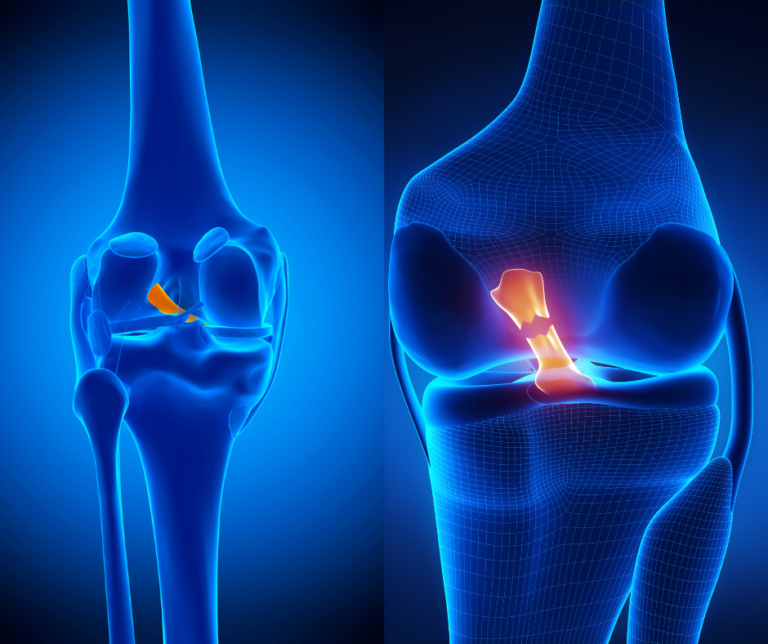
What is the ACL?
The anterior cruciate ligament runs diagonally in the middle of the knee. It prevents the tibia (shin) from sliding out in front of the femur (thigh) and provides rotational stability to the knee.
What causes ACL injury?
The anterior cruciate ligament can be injured in several ways:
- Changing direction rapidly
- Stopping suddenly
- Slowing down while running
- Landing from a jump incorrectly
- Direct contact or collision, such as a football or rugby tackle
Several studies have shown that female athletes have a higher incidence of ACL injury than male athletes in certain sports. It has been proposed that this is due to differences in physical conditioning, muscular strength, and neuromuscular control. Other suggested causes include differences in pelvis and lower extremity (leg) alignment, increased looseness in ligaments, and the effects of estrogen on ligament properties pre menstrual cycles.
What happens if you injure your ACL?
When you injure your anterior cruciate ligament, you might hear a popping noise and you may feel your knee give out from under you. Other typical symptoms include:
- Pain with swelling. Within 24 hours, your knee will swell. If ignored, the swelling and pain may go away on its own. However, if you attempt to return to sports, your knee will probably be unstable, and you risk causing further damage to the cushioning cartilage (meniscus) of your knee.
- Loss of full range of motion
- Tenderness along the joint line
- Discomfort while walking
Treatment of ACL Injury.
Treatment for an ACL tear will vary depending on the patient’s individual needs. For example, a young athlete involved in agility sports will most likely require surgery to safely return to sports. A less active older, individual may be able to return to a quieter lifestyle without surgery. Everyone would benefit from Physiotherapy following a ACL injury to optimise knee function for returning to full activities.